01 · UNDERSTAND
We begin with your move, your timing, your priorities and what is bringing you to the Triangle.
Relocating means learning a new market, comparing unfamiliar communities, and making decisions about where you want to live before the area fully feels like home.
My role is to help you understand the Triangle, narrow the possibilities, and make thoughtful decisions about both the home and the lifestyle around it.
Whether you're moving for work, family, healthcare, retirement, or simply a change of pace, we'll build a plan around what matters most to you.
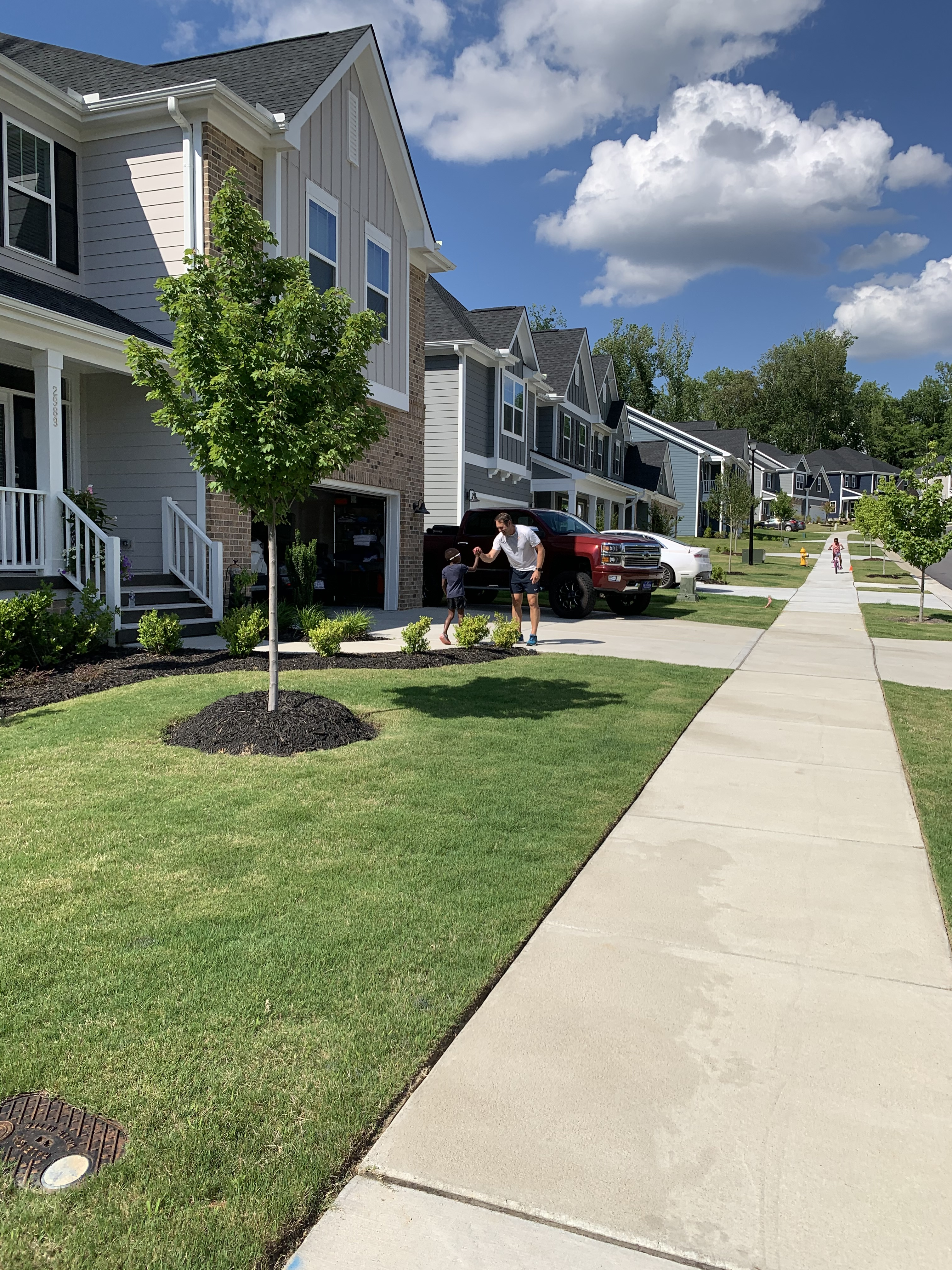
Relocation becomes much easier when we stop asking:
“Where should I live?”
and start asking:
“What do I want my life here to look like?”
Maybe you want to be close to RDU. Maybe access to major healthcare matters. Maybe you want walkability, a quieter neighborhood, a low-maintenance home, proximity to grandchildren, or a community where it’s easy to meet people.
We start with those priorities.
Then we use them to narrow the Triangle into communities and housing options that actually make sense for you.
The goal isn’t to learn every neighborhood. It’s to understand the ones that fit your life.
We begin with your move, your timing, your priorities and what is bringing you to the Triangle.
I help you understand the region: Raleigh, Wake Forest, North Raleigh, Cary and other communities that may fit what you're looking for.
We compare the things that affect everyday life: location, commute, healthcare, airport access, shopping, restaurants, amenities, walkability, maintenance and housing style.
When possible, we tour communities as intentionally as we tour homes. The goal is to help you understand not just what a property looks like, but what living there may actually feel like.
Once a home becomes a serious possibility, we consider the property, location, market, resale, costs, HOA structure and the compromises that come with it.
From offer through closing, I help coordinate the moving pieces so your real estate transaction supports the larger transition you’re making.
A relocation search can become overwhelming because the Triangle gives you so many options.
The answer usually isn’t finding the “best” area.
It’s finding the area that best fits you.
Restaurants, events, walkability, culture and proximity to downtown Raleigh.
Larger lots, more privacy, mature neighborhoods and a little more room to breathe.
Condos, townhomes, planned communities and homes designed for easier upkeep.
Proximity to hospitals, specialists, shopping, services and major roadways.
For buyers who travel frequently or want easier access to family in other cities.
Pools, clubs, trails, social opportunities, 55+ communities and neighborhood lifestyle.
Where you live shapes how you live.
Many relocating buyers begin their search before they are living in the Triangle full time.
That means we may need to make decisions differently.
I can help you narrow areas before you arrive, plan efficient tour days, compare homes and communities, and keep track of the details that become difficult to remember after a long day of showings.
When necessary, technology can help us stay connected between visits, but I don’t want relocation to become a process of choosing a home from a screen.
The goal is to give you enough local context to understand why one option may fit you better than another.
A good relocation plan makes every visit more useful.
A couple in their early 70s came to Raleigh looking for something very specific.
They wanted to be closer to healthcare and a major airport. They wanted restaurants, shopping and amenities nearby. They didn’t want a yard or significant exterior maintenance. And as they thought about the years ahead, having an elevator mattered.
We looked at several options.
Three- and four-story townhomes offered the square footage, but the homes still felt too vertical. Even with elevators, the living spaces were spread across too many floors.
Eventually we found a two-story condo on Oberlin Road that changed the conversation.
It offered an elevator from the garage to both floors, outdoor living with a screened porch and upper deck, a low-maintenance lifestyle, and a location that placed them close to the amenities they wanted.
It wasn’t simply the right property.
It was a home that supported the way they wanted to live next.
Sometimes the best home becomes clear only after you understand what the wrong ones are teaching you.
A RELOCATION STORY
“We were totally in her hands with great confidence. We never would have found this place without Michelle. We never would have appreciated the greater Raleigh area as much without her. We never would have made the final closing go as easily without her.”
Chip Crowl
Relocated from Asheville to Raleigh
When we compare options, we may be looking at:
How the home connects to the places you’ll use most.
Groceries, restaurants, recreation, healthcare, errands and the rhythm of the area.
Single-family home, condo, townhome, active-adult community, low-maintenance living or something in between.
Work, family, airport, highways and regular destinations.
HOA dues, taxes, maintenance, insurance and potential improvement costs.
How well the home supports not just today, but the way you expect to live in the years ahead.
The right home should work in the context of the life around it.
Earlier than you may think.
You don’t need to wait until your move date is set or your current home is under contract.
An early conversation gives us time to talk about your priorities, learn the region, understand price ranges, compare communities and plan your visits more effectively.
We start with the way you want to live.
Commute, airport access, healthcare, schools when relevant, housing style, maintenance, amenities, restaurants, walkability and your preferred pace of life can all help narrow the possibilities.
Rather than trying to learn every part of the Triangle, we focus on the communities that best match your priorities.
Yes.
Many relocation clients begin the process before moving to North Carolina.
We can use phone and video conversations to narrow areas, discuss listings and prepare for in-person visits. When you are in town, I want your tour time to be structured and useful rather than simply seeing as many homes as possible.
There isn’t one number that works for every buyer.
Some clients feel comfortable after one well-planned visit. Others need several trips before the area begins to feel familiar.
The goal is not to rush the decision. It’s to make each visit more productive so you learn something useful every time.
That’s normal.
You don’t need to arrive knowing the difference between every neighborhood, suburb and community.
Part of my role is helping you understand how the pieces fit together and which areas are worth exploring based on what matters to you.
We look at the places you expect to travel regularly and how different communities connect to them.
A home that appears close on a map may feel very different depending on time of day, road access and your actual routine.
Location is more useful when we evaluate it in the context of your life.
Then we treat it as a priority from the beginning.
We can compare communities and housing options based on access to major healthcare systems, specialists and the services that matter to you.
You shouldn’t have to choose the home first and think about those needs later.
For some people, renting first can make sense.
For others, the right home and community become clear enough during the search that buying immediately is comfortable.
There isn’t one correct answer. We’ll talk about your timing, familiarity with the area, financial plans and comfort level so you can decide which approach makes sense for you.
Then coordination becomes an important part of the strategy.
We need to understand the timing of your sale, your financing, when funds may become available, how flexible your move is and what needs to happen on each side of the transition.
The earlier we begin planning, the more options we generally have.
Yes, within the scope of the real estate process and the resources I can provide.
Part of a good relocation experience is helping you get oriented, connect with local professionals and understand what comes next.
I want the move to feel like more than a closing.
You don’t need to know exactly where you want to live before we talk.
We can start with what is bringing you here, the way you want to live, your timing and the questions you have about the area.
From there, I’ll help you narrow the possibilities and decide what the next step should be.
No pressure. Just a thoughtful conversation about your move and what matters most to you.