



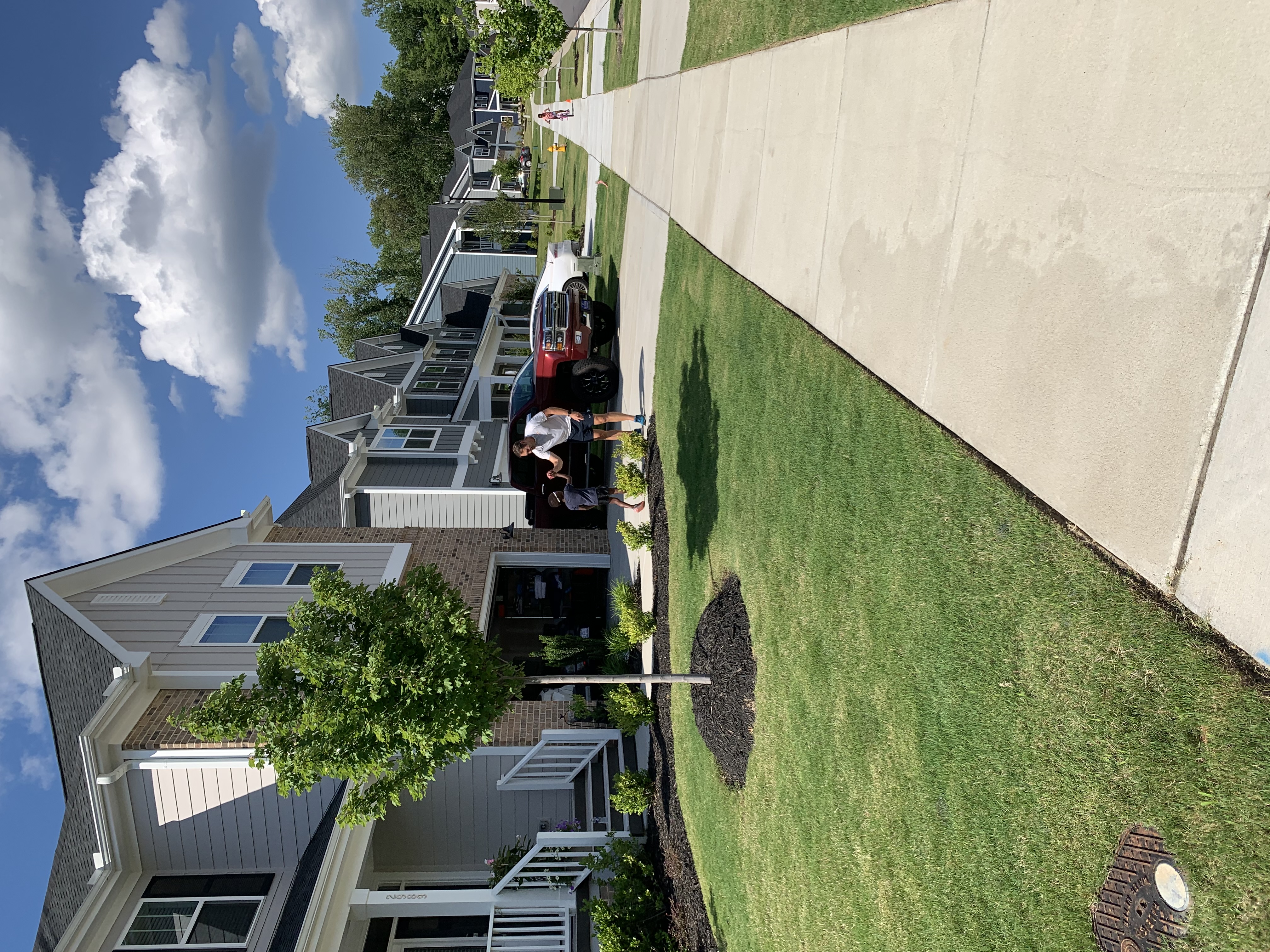
If you're considering relocating to Raleigh, one of the first things you may discover is that “Raleigh” can mean a lot of different things.
Someone may tell you they live in Raleigh when they actually live in Cary, Wake Forest, Apex or another Triangle community. You may work in Raleigh but discover that the neighborhood that best fits your lifestyle is twenty or thirty minutes away.
That's why I don't think the first question should be:
“Where should I buy a house?”
A better place to begin is:
“What do I want my life here to look like?”
Once we understand that, we can start narrowing down the communities and homes that make sense.
Summary Answer
Before relocating to Raleigh, spend time understanding the greater Triangle, not just the City of Raleigh.
Compare communities based on your daily routine, commute, housing preferences, budget, healthcare needs, proximity to the airport, recreation and the amenities you actually use. You should also understand that traffic patterns, new construction, property taxes, HOA structures and housing inventory can vary significantly from one area to another.
There isn't one “best” place to live in the Raleigh area.
The goal is to find the place that best fits the way you want to live.
1. Start by Understanding the Triangle
If you're moving here from another part of the country, the geography can initially be confusing.
Raleigh is part of a larger region commonly referred to as the Triangle, anchored by Raleigh, Durham and Chapel Hill and surrounded by numerous towns and communities.
That means your home search might include places such as Raleigh, Wake Forest, Cary, Apex, Holly Springs, Fuquay-Varina or Durham depending on what matters to you.
Rather than drawing a circle around Raleigh and starting a home search, I prefer to work backward from your life.
Where will you need to go regularly?
What would you like nearby?
What type of community feels comfortable?
And what are you willing to drive for?
Those answers can change the map considerably.
2. Don't Judge Distance by Miles Alone
One of the biggest mistakes you can make when researching Raleigh from another state is looking at mileage without considering how you will actually travel between places.
A home that appears close to work on a map may involve a very different commute during peak traffic. Two communities that look almost equally convenient geographically may provide very different daily experiences.
Before choosing an area, consider the trips you'll make repeatedly:
- Work
- School or childcare
- Airport
- Healthcare
- Grocery shopping
- Restaurants and entertainment
- Family
- Recreation
If one of those destinations is particularly important, we can use it as an anchor when evaluating communities.
A twenty-minute drive you make twice a month is very different from a twenty-minute drive you make twice a day.
3. Think About the Kind of Community You Want
This is where relocation becomes much more personal.
Do you picture yourself in an established neighborhood with mature trees?
Would you rather have newer construction and community amenities?
Do you want to walk to coffee or dinner?
Would you prefer more land and privacy?
Do you want a neighborhood pool and social activities, or would you rather avoid those responsibilities and expenses?
Would a low-maintenance home make life easier?
Those preferences can point us toward very different parts of the Triangle.
I often tell relocating buyers that we aren't simply comparing houses.
We're comparing lifestyles.
4. Understand How Different the Housing Can Be
One of the advantages of the Raleigh area is the variety of housing available, but that variety also means buyers need to understand what they're comparing.
Depending on the community, you may encounter:
- Established neighborhoods
- New-construction communities
- Townhomes
- Condominiums
- Larger suburban homes
- Low-maintenance communities
- Active-adult or age-targeted communities
- Homes on larger lots
- Urban and walkable options
The tradeoffs can be significant.
A newer home might offer energy efficiency and modern floor plans but come with a smaller lot or ongoing neighborhood construction.
An established home might provide mature landscaping and a larger lot while requiring more maintenance or updating.
A townhome or condominium may simplify exterior upkeep but come with additional HOA considerations.
There isn't a universally better choice. There is simply the choice that fits your priorities.
5. If You're Considering New Construction, Have Your Own Representation
Relocating buyers are often attracted to new construction because it can feel easier to navigate from a distance.
There are some wonderful new-home communities throughout the Triangle, but remember that the representative in the sales center represents the builder.
Having your own real estate representation gives you someone focused on your interests and your transaction.
Your agent can help you compare communities and builders, understand the contract and timeline, evaluate homesites and options, monitor construction milestones and think about resale considerations that may not be obvious when you're standing in a beautiful model home.
Ideally, involve your agent before your first visit or registration with a builder, because builder policies regarding buyer-agent representation can vary.
6. Look Beyond the Purchase Price
When comparing homes in different communities, don't stop at the asking price.
Your overall housing cost may also be affected by items such as:
- Property taxes
- HOA dues
- Homeowners insurance
- Utilities
- Maintenance
- Commuting costs
- Amenities
- New-construction upgrades or lot premiums
For condominiums and some townhome communities, it is also important to understand what the association maintains and what remains the homeowner's responsibility.
Two similarly priced homes can have noticeably different ongoing costs.
7. Healthcare and RDU Can Matter More Than You Initially Think
For many relocating buyers, proximity to healthcare and Raleigh-Durham International Airport becomes increasingly important.
That doesn't necessarily mean you need to live beside either one.
Instead, think about how frequently you expect to use them.
If you travel several times a month, airport access may deserve more weight in your home search.
If access to particular medical providers or hospital systems is important, we should incorporate that into the geographic search from the beginning rather than treating it as an afterthought.
These are the kinds of considerations that often help narrow a very large search area into a manageable group of communities.
8. Visit Communities Before You Visit Houses
This is one of my favorite strategies for relocating buyers.
If possible, spend part of your first visit exploring areas rather than properties.
Drive through neighborhoods.
Stop for coffee.
Visit a grocery store.
Walk around.
Drive the route to work.
See what the area feels like on a Saturday morning and, if possible, during a weekday commute.
A house can be changed.
Its location can't.
When we identify two or three areas that feel right, the actual home search becomes much more focused and productive.
9. Give Yourself Permission to Change Your Mind
Relocation buyers often arrive with a very specific idea of where they should live.
That's understandable. You've probably spent months researching online.
But online research can't completely tell you what a community feels like.
You may arrive convinced you want one area and fall in love with another.
You might discover that the house style you thought you wanted doesn't actually fit the way you live.
Or something you considered essential may become less important once you understand the area.
That's not a failed search.
That's the purpose of the search.
Good relocation guidance should help you learn enough about your options to refine your priorities.
Questions to Ask When Relocating to Raleigh
- Where will I need to travel most frequently?
- How much commuting am I comfortable with?
- Do I want an established neighborhood or newer construction?
- How important are walkability, restaurants and shopping?
- Do I want community amenities?
- How much home and yard maintenance do I want?
- How important is access to RDU?
- Are particular healthcare providers or systems important to me?
- What ongoing costs should I compare in addition to the purchase price?
- What would I like an ordinary Saturday in my new community to look like?
That last question is one of my favorites.
Because it moves the conversation away from simply buying real estate and toward choosing a life.
Start With the Life, Then Find the Home
Relocating can feel overwhelming because you're making several decisions at once.
You're choosing a region.
Then a community.
Then a neighborhood.
Then a house.
Trying to make all four decisions simultaneously can make every home feel either possible or wrong.
A better approach is to narrow the choices one layer at a time.
Understand the Triangle. Identify the communities that fit your priorities. Learn the market within those areas. Then start evaluating homes.
The goal isn't simply to move to Raleigh.
It's to find the part of the Triangle where your next chapter makes sense.
Home isn't just where you live. It's how you live.



.svg)
